Volumetric Weight: The Core Logic Behind Air & Express Freight Pricing
Volumetric weight (DIM weight) is a core pricing rule for air freight and express shipping. In this guide, we break down the definition, the official volumetric weight formula, standard divisors including 5000 for couriers and 6000 for IATA air freight, and how to calculate chargeable weight by comparing volumetric weight vs actual weight. Learn common calculation pitfalls and practical packaging strategies to reduce volumetric weight and cut your cross-border shipping costs for e-commerce and wholesale shipments.
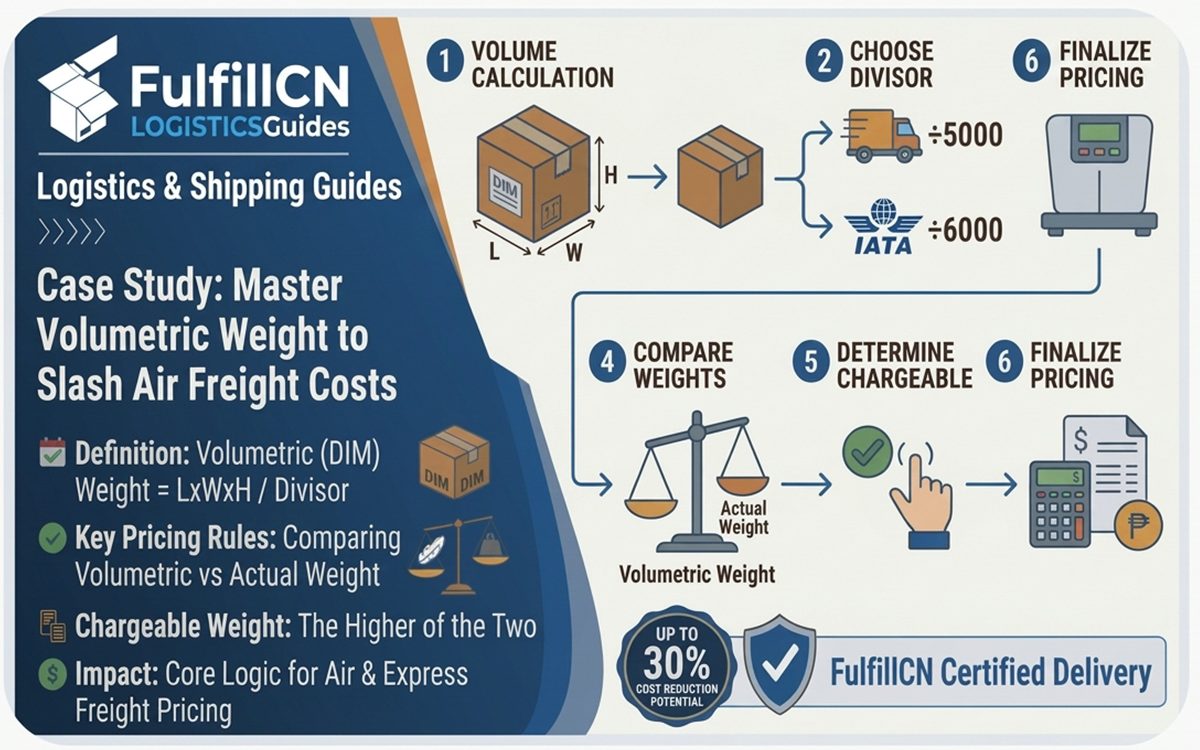
Published: Logistics & Supply Chain Insights | Audience: E-commerce Operators, Importers, 3PL & Freight Forwarders
If you have ever shipped a large parcel filled with lightweight goods — bubble wrap, plush toys, home decor, or inflatable products — you may have encountered a surprise freight bill: the carrier charged far more than the actual scale weight. The reason is volumetric weight, also widely called dimensional weight or DIM weight.
Volumetric weight is not a physical measurement you read from a weighing scale. It is a calculated weight that translates the space a shipment occupies inside aircraft, delivery vans or sorting hubs into a billing weight. Carriers invented this rule to balance the fundamental constraint of air and express transport: cargo capacity is limited by both weight and space. A plane or truck can hit its cubic fill limit long before it reaches its maximum payload weight. Without volumetric pricing, low-density, bulky shipments would consume valuable capacity at disproportionately low rates, eroding carrier margins and increasing costs for dense, heavy cargo shippers alike.
Volumetric Weight vs Actual Weight vs Chargeable Weight
Three terms form the foundation of this pricing mechanism, and mixing them up is the top source of shipping disputes:
- Actual (gross) weight: The true physical weight of packed cargo, including boxes, pallets, packaging and accessories, measured on a calibrated scale.
- Volumetric (DIM) weight: Weight derived purely from outer dimensions of each package.
- Chargeable / billable weight: The weight the carrier uses to calculate freight. The universal rule for air and express is:
Chargeable Weight = The higher value between actual gross weight and volumetric weight
If your parcel is dense (e.g., metal parts, electronics), actual weight will govern billing. If it is large and light, volumetric weight becomes your billable weight.
Volumetric Weight Calculation Formulas & Standard Divisors
This is the core formula used by almost all international carriers. The only variable you need to confirm is the dimensional divisor.
Metric Formula (cm → kg, most common for global cross-border shipping)
Volumetric Weight (kg) = Length (cm) × Width (cm) × Height (cm) ÷ Divisor
Common divisor standards:
- International express couriers (DHL, FedEx, UPS): Divisor = 5000 (1 CBM = 200 kg)
- IATA general air freight: Divisor = 6000 (1 CBM = 167 kg)
- Some regional road couriers: Divisor = 4000 (higher volumetric weight)
Imperial Formula (inch → lb, mainly US domestic courier)
Volumetric Weight (lb) = Length (in) × Width (in) × Height (in) ÷ 139
Practical Calculation Example
Package size: 60 cm × 40 cm × 30 cm, actual gross weight = 8 kg
- Express (divisor 5000): 60 × 40 × 30 ÷ 5000 = 14.4 kg
- Air freight (divisor 6000): 60 × 40 × 30 ÷ 6000 = 12 kg
In both scenarios, volumetric weight is higher than actual weight. Therefore, the chargeable weight will be 14.4 kg for express service and 12 kg for IATA air freight. This clearly explains why bulky parcels often cost less via bulk air freight than courier express, thanks to the more lenient 6000 divisor.
Important fine print: Most carriers round each dimension upwards to the next whole unit before calculation. Oversized protrusions, loose pallet stretch wrap and uneven packaging all count toward outer dimensions. Measurements are taken along the longest points of each side, not just the product itself. For multi-piece shipments, volumetric weight is calculated per carton, then summed and compared against total actual weight.
Why Divisors Differ: Capacity Economics
The divisor reflects a carrier’s assumed density threshold.
- 5000 for express: Express networks run on fast sorting, small vans and tight ULD / container utilisation. Space is scarcer, so the density bar is higher.
- 6000 for IATA air freight: Airlines operate large main-deck and bellyhold cargo with higher tolerance for low-density cargo. The 167 kg/CBM standard has been the industry benchmark for decades.
Ocean freight is a separate system: sea freight is normally quoted by CBM (cubic meter) for LCL, not volumetric weight, because vessel cubic capacity is abundant relative to weight limits for most general cargo.
Common Pitfalls That Cause Unexpected Volumetric Surcharges
Many shippers only check product weight and ignore packaging geometry. Watch these risks:
- Over-sized packaging: Using an oversized box with void fill doubles or triples volumetric weight.
- Irregular shapes: Cushions, frames, folded furniture create “air pockets”. Carriers measure the minimal rectangular outer envelope, not the usable product space.
- Mixed consignments: One bulky carton in a heavy shipment can lift the overall billable weight.
- Inconsistent divisors: A quote that says “air freight” may still apply courier divisor 5000 if the forwarder uses express consolidation. Always confirm divisor in your quotation.
- Pallet overhang: Any cargo sticking out beyond the pallet edge extends the measured length and width.
Operational Strategies to Optimise Volumetric Weight
Volumetric optimisation directly reduces landed cost for e-commerce and wholesale suppliers. These are proven best practices:
- Right-size packaging: Match box size closely to product dimensions; replace thick bubble wrap with lightweight foam, air pillows or moulded inserts to cut void space.
- Flat-pack design: For furniture, home goods and retail SKUs, engineer products to ship disassembled. This is the single most impactful volumetric reduction tactic.
- Consolidate small parcels: Multiple loose small boxes often have higher total volumetric weight than one tightly packed master carton.
- Channel selection: Separate dense goods via express, and low-density bulk cargo via IATA air freight to leverage the 6000 divisor.
- Pre-calculate during product onboarding: Add volumetric weight into your product master data and Shopify/WMS system, not only actual weight. This eliminates quoting errors and customer shipping overcharges.
- Negotiate contract terms: High-volume shippers can sometimes secure custom divisors or volumetric thresholds in carrier contracts.
Final Takeaway
Volumetric weight is not a hidden fee or arbitrary surcharge. It is a fundamental pricing model built around the physical limits of air and express logistics. Mastering the difference between 5000 and 6000 divisors, accurate dimensioning and smart packaging design lets you forecast freight cost correctly, avoid billing disputes and improve supply chain profitability.
Before confirming any shipment or accepting a freight quotation, always verify three things:
✅ Dimensional divisor✅ Rounding rule for measurements
✅ Whether chargeable weight is calculated per package or per shipment
